
Titanium and stainless steel both have a place in a rider’s workshop. This article compares them in practical terms — weight, corrosion, care, and when each may be appropriate — without treating either material as a universal answer.
Two familiar materials, different jobs
Stainless steel is the fastener most riders already know. It is widely used as original equipment, easy to source, and entirely appropriate in a great many bicycle applications. Grade 5 titanium is the material riders usually mean when they talk about a lighter, cleaner-looking upgrade bolt.
The useful comparison is not “which metal is better” in the abstract. It is which material suits a particular job, once thread, length, head clearance and installation method have been considered.
This article stays with general, widely accepted differences between the two materials, and with one concrete Titannlink example: the current M5 × 12 mm Grade 5 T25 bottle cage bolt. It does not offer torque figures, and it does not suggest that a titanium bolt is a direct replacement in every interface on a bike.
Weight, in practical terms
In general materials terms, Grade 5 titanium has a lower density than the stainless steels commonly used for fasteners. A titanium bolt of a given size is therefore typically lighter than a stainless bolt of the same dimensions. That is a property of the metals, not a laboratory result from a Titannlink test programme.
How much that difference matters depends on the job. A handful of small bolts will not transform the feel of a bicycle on their own. They can, however, be a considered part of a lighter, more carefully finished build — for example, the bolts that secure one bottle cage, or both cages on the bike.
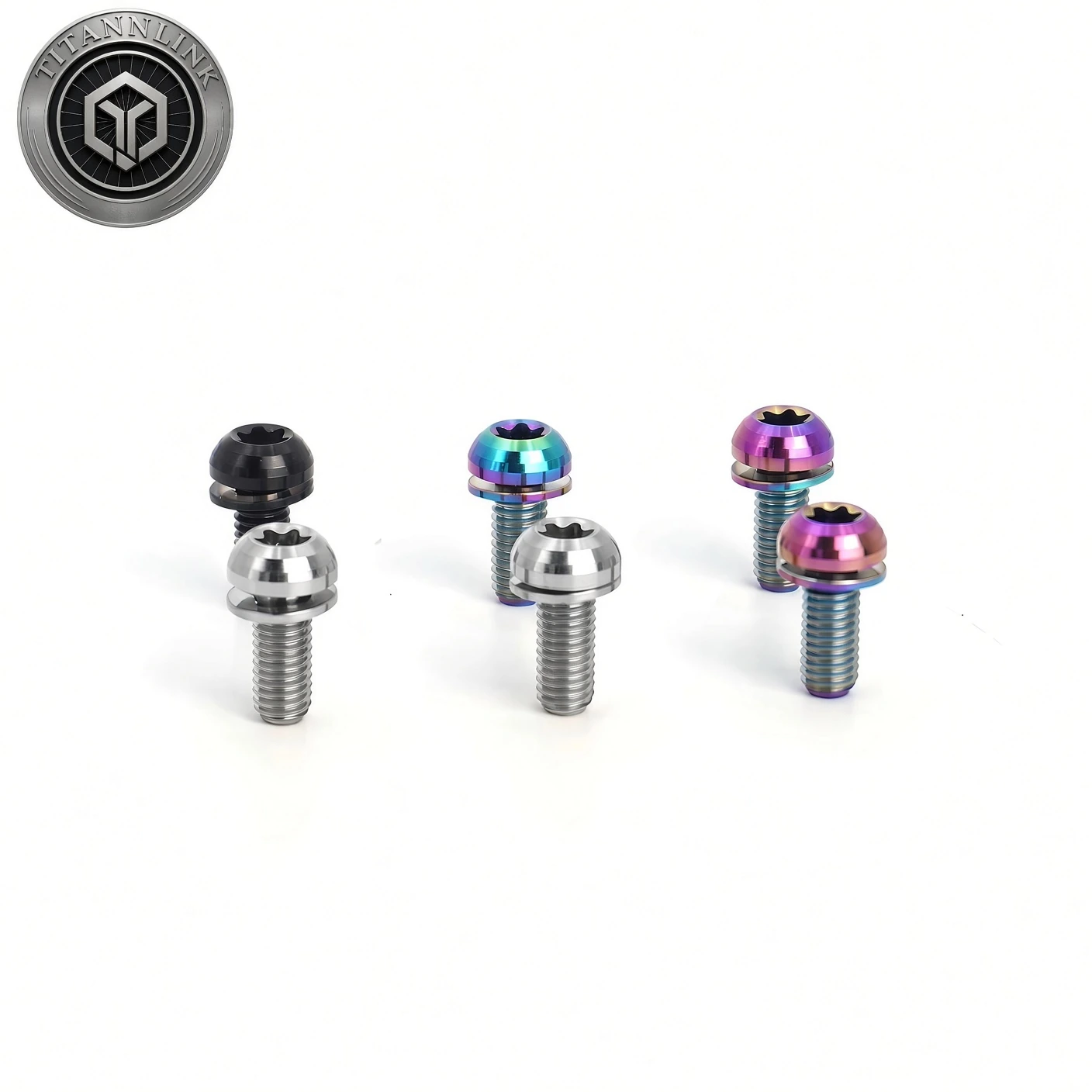
For reference, Titannlink’s current M5 × 12 mm Grade 5 bottle cage bolt has an approximate weight of 1.2 g, or 4.8 g for the 4-pack. One pack can cover two compatible cages, using two bolts each. We have not published a matching stainless figure, so this article does not invent one.
Corrosion, weather and everyday use
Both materials are chosen, in part, because they cope better with moisture than ordinary carbon steel.
Stainless steel earns its name from a protective surface film. In many riding conditions it stays serviceable for years. In harsher use — salt, sweat, winter roads, or a damaged surface — stainless fasteners can still discolour or show staining. That is not a reason to dismiss the material. It is a reason to be honest about upkeep and environment.
Grade 5 titanium is generally valued for good corrosion resistance. In everyday language, it does not rust in the way ferrous bolts can. That stability is one reason riders look to titanium for hardware they would rather not see mark a frame or a cage over time. Again, this is general knowledge about the alloy, not a claim from a comparative salt-spray test published by Titannlink.
A clean bolt still depends on correct fit and sensible care. Corrosion resistance is not a substitute for checking that the fastener belongs in the hole.
Care and installation
The installation rules are more similar than they first appear.
Use the correct driver — for the current Titannlink bottle cage bolts, a fitting T25. Verify the frame and bottle cage’s bolt specifications, depth and head clearance before installation. Follow the component manufacturer’s torque and thread-treatment guidance; matching M5 threads alone does not guarantee fit.
Workshops often note that titanium threads can be more prone to galling than stainless if they are assembled dry or without appropriate treatment. That is general workshop knowledge, not a reason to invent a paste, a torque number, or a house method. Follow the component manufacturer’s guidance, and do not treat a matching thread as a complete specification.
The same caution applies to stainless. Over-tightening, the wrong length, or a head that does not clear the cage can cause problems in either material.
When each may be appropriate
Stainless steel is often the right choice when you are replacing an original fastener with the specified material, stocking a workshop with familiar hardware, or working where the component maker has called for steel. It is proven, widely understood, and sufficient for a great deal of everyday riding.
Grade 5 titanium is worth considering for carefully selected upgrades where lower weight, corrosion resistance and finish are genuinely useful, and where the specification has been checked. Bottle cage bolts are a clear example: they are visible, they are not a substitute for safety-critical fasteners, and a verified M5 × 12 mm low-profile T25 bolt can be a neat, practical change.
What this comparison does not do is recommend swapping titanium bolts into stems, brakes or other safety-critical interfaces. Thread, length and material are only part of a fastener specification. If a component manufacturer has specified a particular bolt, that guidance should be followed.
Finish and the look of the build
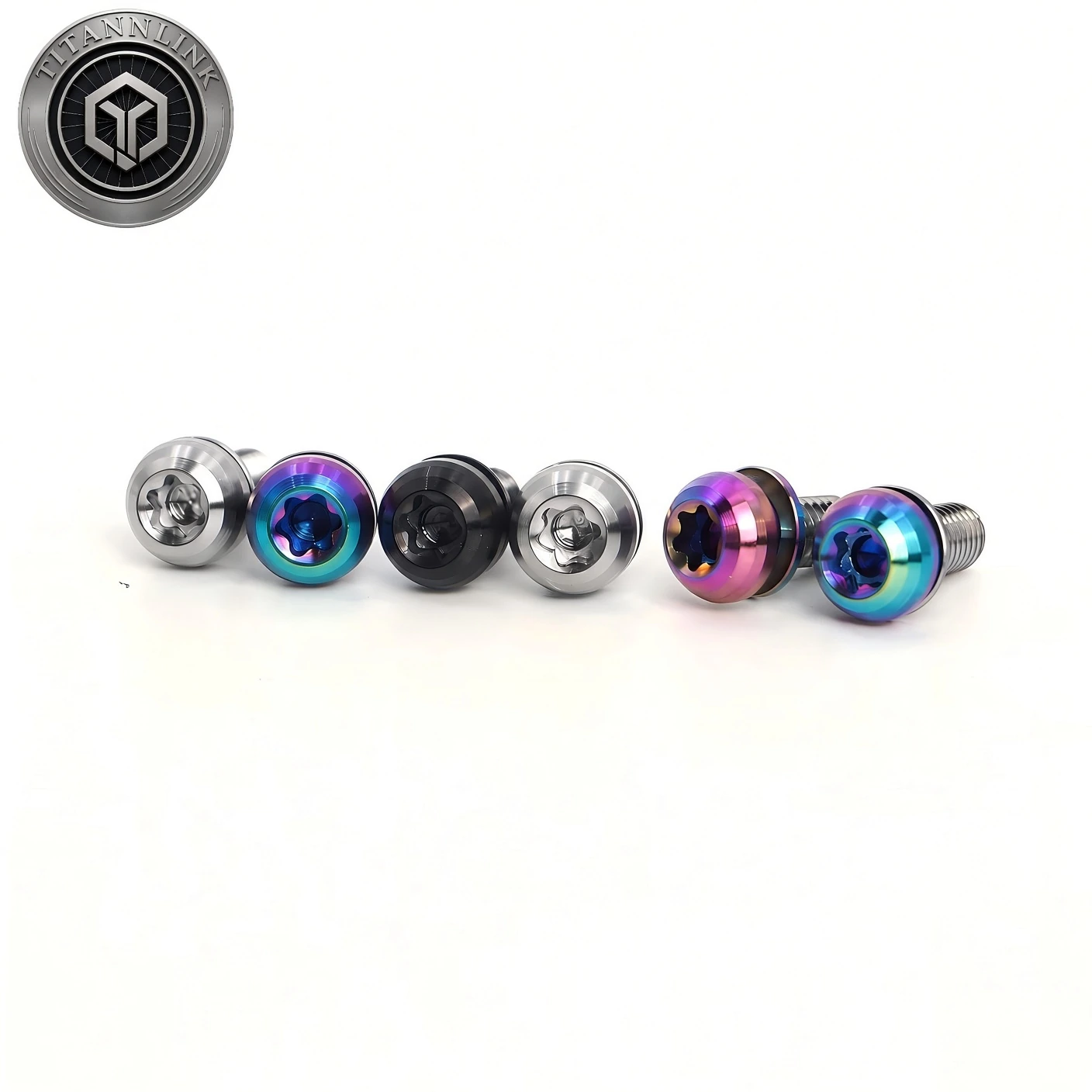
Material is not only a technical choice. Stainless bolts have a familiar silver look. Titanium hardware can be left natural, or finished to suit the rest of the bike. Titannlink’s current bottle cage bolts are offered in Natural, Black (PVD) and Rainbow (anodised), so the same specified bolt can sit quietly or more colourfully, according to the build.
Those finishes do not change the need to confirm fit. They are the last decision, not the first.
A measured way to look closer
If you want to examine a current Grade 5 specification in detail, the M5 × 12 mm T25 bottle cage bolts are described here:
Titanium Bottle Cage Bolts M5 × 12 mm — Grade 5, 4-Pack
Titannlink’s work is Grade 5 titanium bicycle hardware, and further hardware is in development. The bottle cage bolt set is the in-stock product to consult today. For questions about specifications, material documentation or workshop use, email info@titannlink.com.